
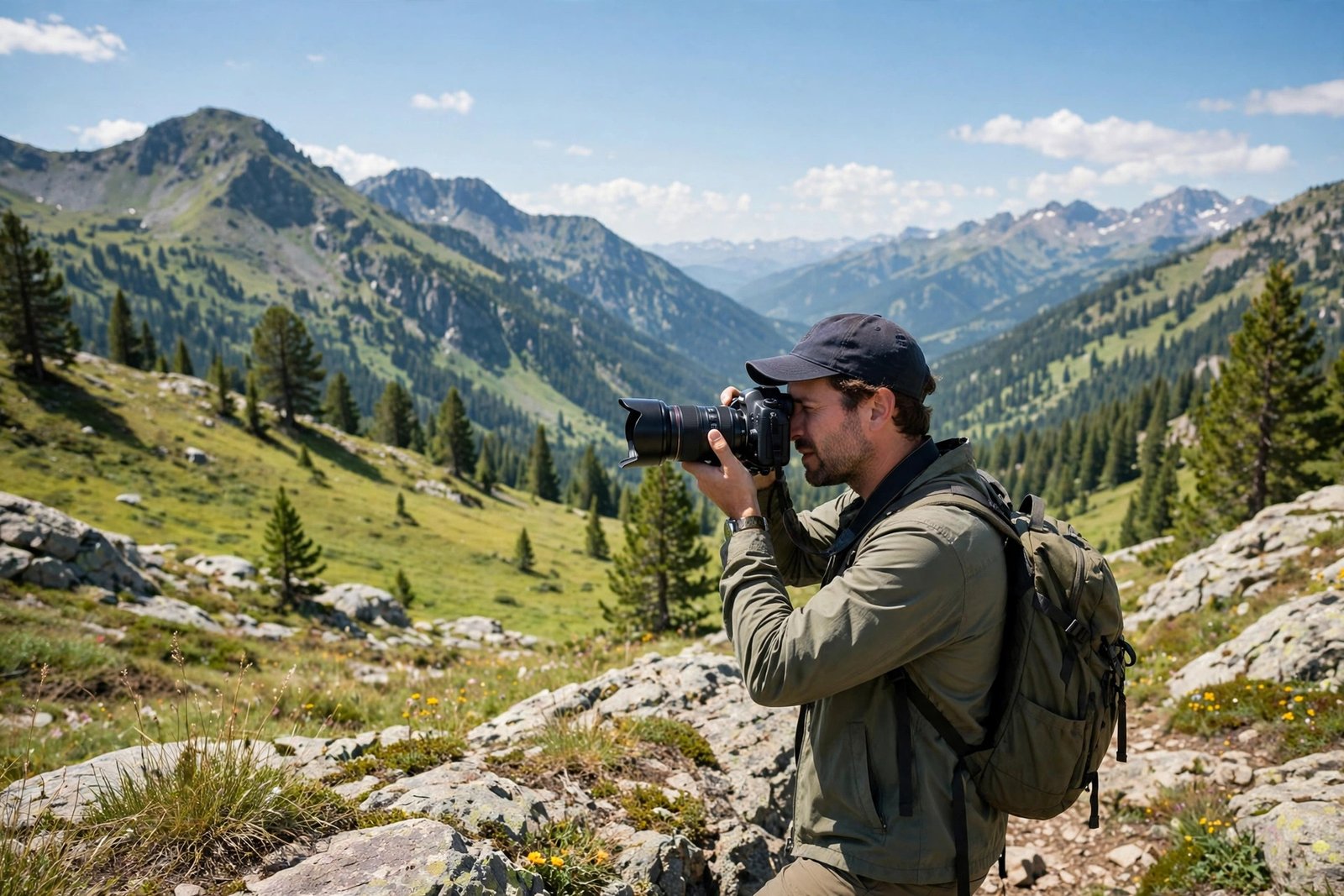
Every website, advertisement, and presentation needs images, and most of those images are not taken by the people using them. They are licensed from stock libraries, and the photographers who contributed them earn a royalty each time one of their photos is downloaded. If you enjoy photography, selling stock photos is a genuine way to earn royalties from work you have already done.
It is not a fast way to earn, and it is not a way to get rich from a handful of photos. Stock income builds slowly, photo by photo, as your portfolio grows. This guide explains how stock royalties work, what actually sells, and how to build a portfolio that earns steadily over time.
How Stock Photo Royalties Work
A stock agency licenses your photos to buyers, such as publishers, advertisers, and businesses. Each time a buyer downloads or licenses one of your images, you earn a royalty, which is a share of the license fee. You keep the copyright to your photos; you are licensing their use, not selling the photos themselves.
Royalty rates differ by agency and by license type. Some agencies pay a fixed percentage of the license price. For example, Adobe Stock’s contributor program pays contributors a percentage of the license fee for each download, and the details are published in Adobe’s contributor royalty information. Other agencies use tiered systems, where your rate rises as your lifetime downloads grow. Before you commit to an agency, read its current contributor terms, because rates and rules change and older articles about them go out of date.
Most agencies accept photos, and many also accept video clips and illustrations. Video usually earns more per download than a photo, but it takes more work to shoot and edit. Photos are the simplest place to start, and a strong photo portfolio is the foundation for everything else.
What Actually Sells
The photos that sell best are not always the most artistic ones. Buyers search for images that solve a communication problem: a small business owner looking for a photo of a team meeting, a blogger needing a picture of a morning coffee routine, a publisher illustrating an article about remote work. Useful beats beautiful when the buyer has a deadline.
Authentic, everyday scenes are in steady demand. Photos of real people doing real things, workplaces, food preparation, travel, health, and family life all sell consistently. Overly staged images with forced smiles and perfect lighting have become less popular, because buyers increasingly want images that look like real life.
Concepts sell too, especially for business and technology topics. A photo that clearly communicates an idea, such as teamwork, growth, security, or learning, can be used in many different articles and presentations, which means it can be downloaded many times. When you shoot, think about the caption a buyer might write under the image. If you cannot imagine the caption, the photo may be too vague to sell.
Choosing Agencies
The major stock agencies include Adobe Stock, Shutterstock, Getty Images, and iStock, among others. Each has its own application process, review standards, and royalty structure. Some require you to apply with a sample portfolio before you can upload freely. Others let anyone upload, but review every image before it goes live.
It is usually worth contributing to more than one agency, unless you have agreed to exclusivity with one of them. Non-exclusive contributors can place the same photos on several platforms, which increases the chance each photo gets found. Just make sure you understand each agency’s exclusivity rules before you upload, because an exclusive agreement can restrict where else you may sell the same work.
Read the model release rules carefully. Any photo with a recognizable person in it needs a signed model release before an agency will accept it for commercial use. If you photograph friends or family, get the release signed at the time of the shoot, not months later when you can no longer reach them. Photos of private property, trademarks, and logos have similar restrictions, and agencies reject images that show them prominently without the right releases.
Building a Portfolio That Earns
Stock income is a numbers game with a quality filter. A portfolio of a few dozen photos will earn very little, because each photo has only a small chance of being found in a given month. Portfolios that earn steadily usually contain hundreds or thousands of images, built up over months and years.
That does not mean you should upload everything you shoot. Agencies review submissions, and a high rejection rate can affect your standing. Upload your strongest work, and treat rejections as feedback. Common rejection reasons include noise, poor focus, overexposure, and images that are too similar to what you already have in your portfolio.
Shoot in batches around a theme. Instead of taking one photo of a home office, spend an afternoon shooting a whole series: someone working at a desk, a video call, a coffee break, a notebook and laptop, a tidy workspace and a messy one. A series gives buyers choices, and it gives the search engine more of your images to show for related searches.
Keywording: The Work Nobody Sees
Keywording is the least glamorous part of stock photography and one of the most important. Buyers find photos by searching words, so a photo with no keywords, or with the wrong keywords, is invisible no matter how good it is.
Describe what is actually in the photo: the subject, the action, the setting, the mood, and the concept. Include both literal words and conceptual ones. A photo of two people shaking hands in an office is literally a handshake, but a buyer might search for agreement, partnership, or business deal. Include all of them, as long as they honestly describe the image. Misleading keywords backfire: buyers who open an image that does not match their search will not download it, and agencies track that.
Most agencies suggest keywords automatically now, but do not accept them blindly. Automated suggestions often include words that do not fit, and they miss the conceptual terms that buyers actually search for. Spend a few minutes on each image’s keywords. It is tedious, but it is the difference between a portfolio that earns and one that sits unseen.
Gear and Technique
You do not need expensive gear to start. Modern phones take photos that agencies accept, especially for lifestyle and travel subjects. What matters more is light, composition, and sharpness. Shoot in good natural light, keep your subject in focus, and avoid heavy filters that distort colors.
Technical quality is where many beginners get rejected. Check your images at full size before uploading. Look for noise in shadows, soft focus on the subject, and distracting objects at the edges of the frame. A photo that looks fine on a phone screen can reveal problems on a large monitor, and reviewers look at full size.
Learn the basics of editing, but keep it honest. Adjusting exposure, white balance, and cropping is normal. Removing objects, swapping skies, or heavily altering a scene crosses into manipulation, and agencies have rules about it, especially for images presented as editorial or documentary work. When in doubt, submit the honest version.
Setting Realistic Expectations
Stock photography pays small amounts per download, and most photos will earn little or nothing. A small number of your images will do most of the earning, and you cannot reliably predict which ones in advance. That is why volume and consistency matter more than any single shoot.
Think of it as a long-term side project. Photographers who earn meaningful stock income usually spent a year or more building their portfolios before the monthly totals became noticeable. The income is genuinely passive once the photos are live, because the same images can keep selling for years, but the building phase is real work.
Track your results by theme, not just by total. If your food photos consistently outsell your landscapes, shoot more food. If a particular agency accepts more of your work and pays better per download, give it more of your attention. The data from your own portfolio is more useful than any general advice, including this article.
Common Mistakes to Avoid
The most common mistake is uploading photos of things buyers do not need: sunsets with no subject, blurry concert shots, or pictures of your lunch with no context. Before you upload, ask who would buy this image and for what purpose. If you cannot answer, do not upload it.
Another mistake is ignoring releases. A great portrait with no model release is unsellable for commercial use, no matter how good it is. Build releases into your shooting routine so you never lose a strong image to paperwork.
Finally, do not expect one agency or one viral photo to change everything. Stock income comes from a broad portfolio across the agencies you use, maintained over time. The photographers who succeed are the ones still uploading a year later, while everyone who expected quick money has moved on.
If you already take photos you enjoy, stock photography is a sensible way to earn from them. Learn what buyers need, shoot useful images in series, keyword them honestly, and keep building. The royalties will follow the portfolio.
Frequently Asked Questions
Do I keep the copyright to my stock photos?
Yes. You license the use of your photos to buyers through the agency. You are not selling the copyright unless you sign a separate agreement that says so, which is not how standard stock contributor programs work.
Can I sell the same photo on multiple stock sites?
Usually yes, if you are a non-exclusive contributor. Check each agency’s terms before uploading, because an exclusive agreement with one agency can prevent you from selling the same images elsewhere.
Do I need a model release for every photo with a person in it?
For commercial stock use, yes, any recognizable person generally needs a signed model release. Photos without releases may still be accepted for editorial use in some cases, but the market for them is smaller.
How many photos do I need before I start earning?
There is no fixed number, but earnings generally stay small until your portfolio reaches hundreds of images. Each photo adds a small chance of a sale, so the total grows with the portfolio.